

 Previous
 Back
 Next
An LED mesh screen is usually bought for one of two reasons: the audience needs to see through it, or the structure cannot carry a solid panel. Both reasons are common at large events and on building facades, and both are easy to lose sight of once a specification turns into a list of numbers. This article sets out how we approach an LED mesh screen project, what we need from a venue or production team, and what our delivered projects actually look like. It is written for engineers, technical directors and procurement teams who have to sign off on a design, not for someone looking for a catalogue price.
One point should be clear at the start: we do not publish fixed performance figures for a standard mesh screen. Pixel pitch, cabinet format, rigging and power distribution are all engineered to the project. The projects below are individual delivered specifications, not a range of options. If a number is not in the project record, we do not state one. That approach costs us a tidy comparison table, but it keeps the proposal honest.
What an LED Mesh Screen Is, and What It Is Not
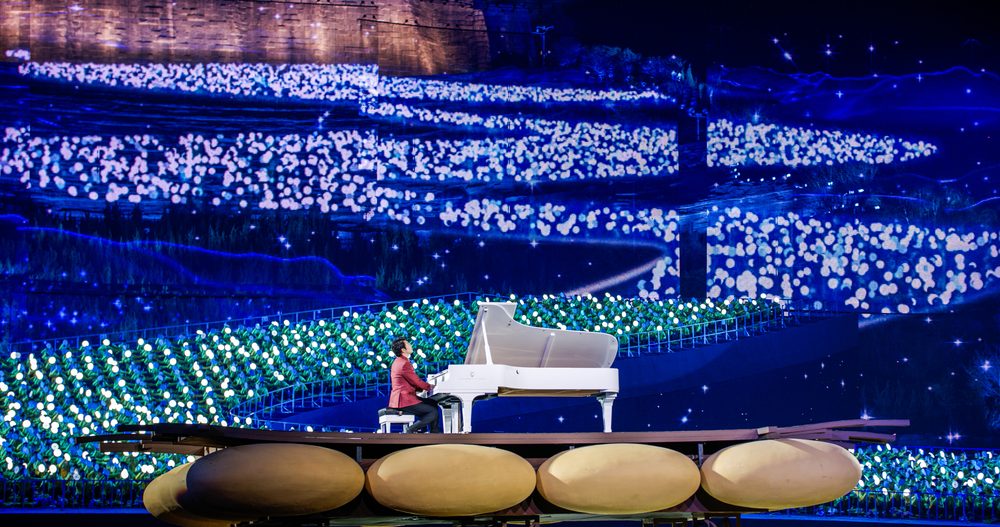
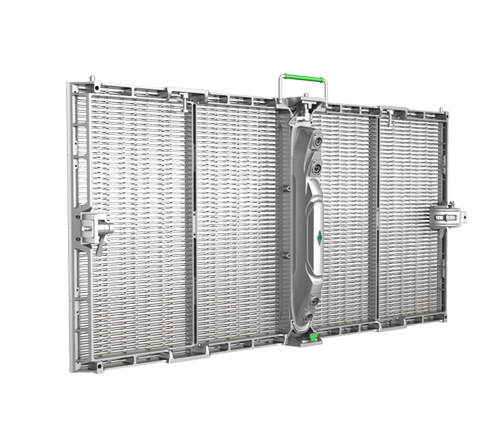
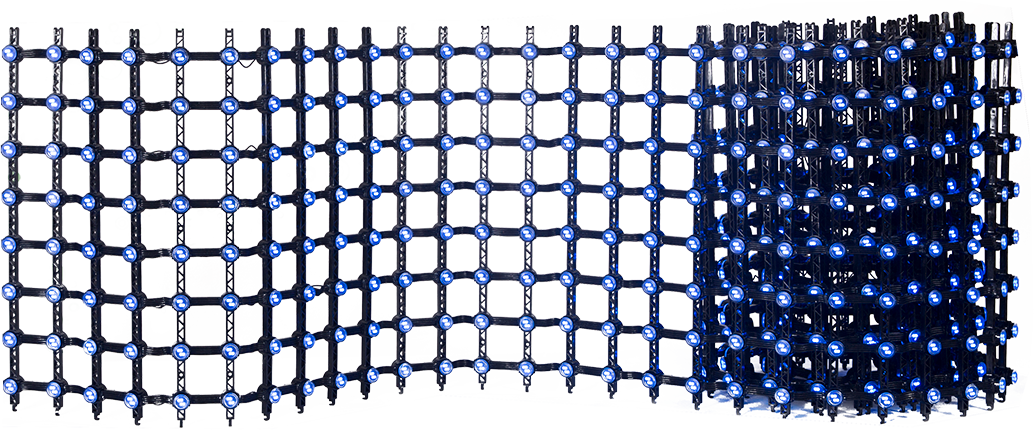
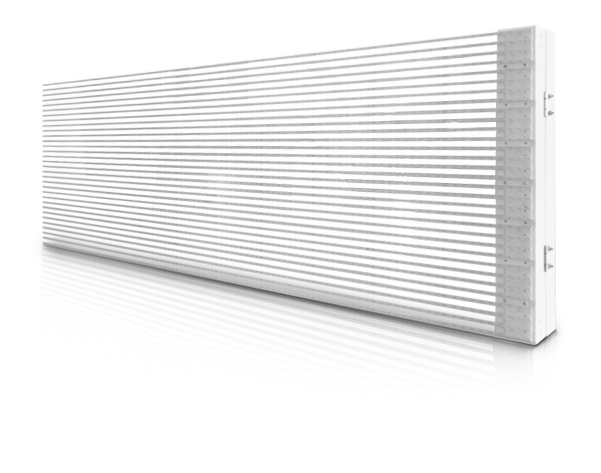
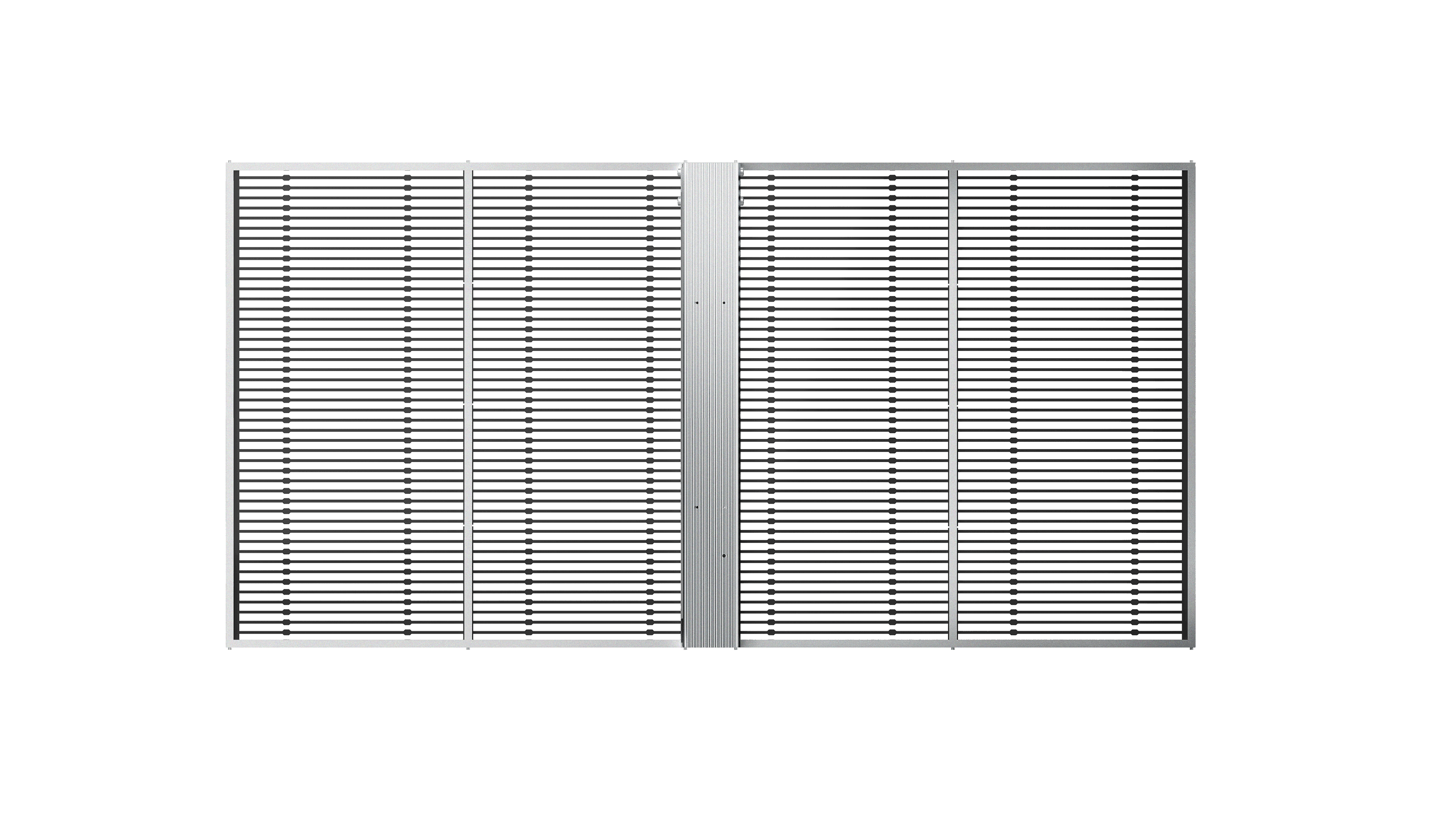
In display terminology, a mesh screen is an open-structure display: the emitting elements are carried on strips or a grid with deliberate gaps, so air, light and sound can pass through. That is different from a conventional cabinet screen, which presents a continuous face. It is also different from a transparent LED screen, which is built on glass or a clear carrier for window and storefront work, and from an adhesive film screen that is applied directly to glazing. All three belong to the same see-through family, but they solve different problems; the indoor transparent screen and adhesive film format have their own design rules.
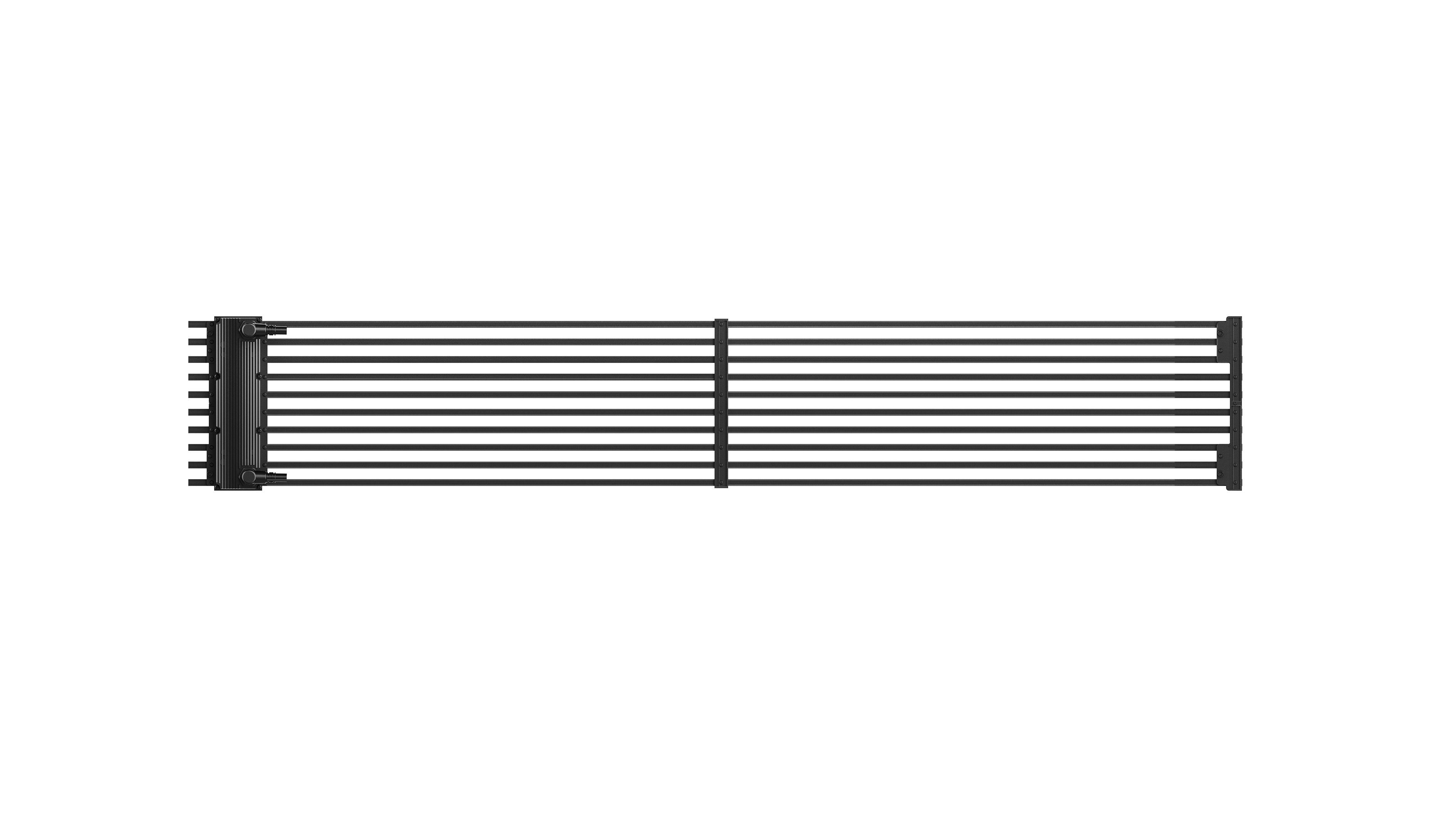
A grille screen is a close relative of the mesh screen, typically built as linear light bars. Floor screens and 3D light-point matrices are also part of the same engineering family: the common thread is that the display is a structure first and a screen second. We treat them as one product line because the design questions are shared, namely how it hangs, how it sheds wind, how it is powered, and how a technician reaches a failed element.
What we do not do is mix this product line with curved interior projection surfaces. Those are a separate product family with separate engineering and separate documentation. If your project is an enclosed curved viewing surface rather than a facade, a stage or an open span, this article is not the right starting point. Keeping the families apart is not just a naming preference; the structural, thermal and content questions are genuinely different.
Why Airflow and Weight Drive the Structure
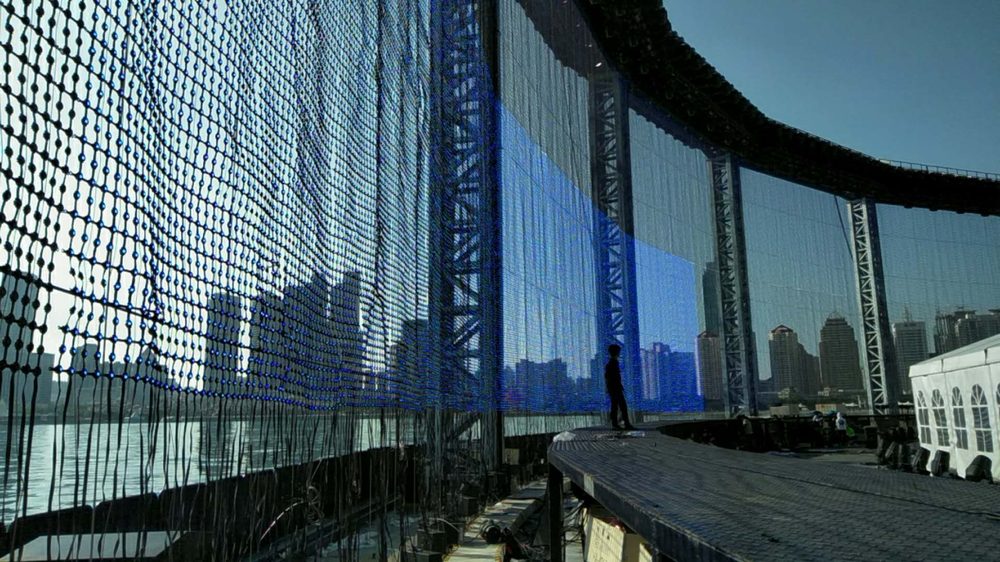
The reason to choose an open structure is usually structural before it is visual. A solid display face on a stage or a building elevation presents a large area to the wind. An open structure lets air pass through, which changes both the load that the support frame has to resist and, on a facade, what happens to the building behind it. The trade-off is that the screen no longer supports itself as a rigid panel: it needs a frame, and the frame needs an attachment strategy.
That is why the first document we ask for is not a content brief but a structural one: where the screen can hang, what the existing steel or facade can take, and who signs off the load case. On a temporary event build the answer may be a truss and ballast; on a permanent installation it may be a bracket schedule tied to the building mullions. We do not publish a universal weight per square metre, because the number changes with the pitch, the strip format and the frame. The only useful figure is the one calculated for your structure.
Airflow also affects the show. A mesh screen suspended behind performers or in front of a lighting rig does not block the rig the way a solid surface does, and it does not enclose a cavity in the same way. Production teams often care about this more than a datasheet: a screen that disappears into the lighting design is easier to work with than one that has to be designed around. We treat the open area, the rigging depth and the service clearance as one conversation with the technical director, not as three separate line items that get reconciled on site.
Pixel Pitch Is Calculated per Project
Pixel pitch on a mesh screen is not selected from a shelf. It follows the closest viewing distance, the size of the surface, the content and the structural grid that the strips have to sit on. A screen seen from a stadium stand and a screen seen from a shopfront a few metres away are different products even if the area is similar. The pitch also interacts with the open structure: change the pitch and you change how much of the surface is emitter and how much is gap, which feeds straight back into the load case and the power design.
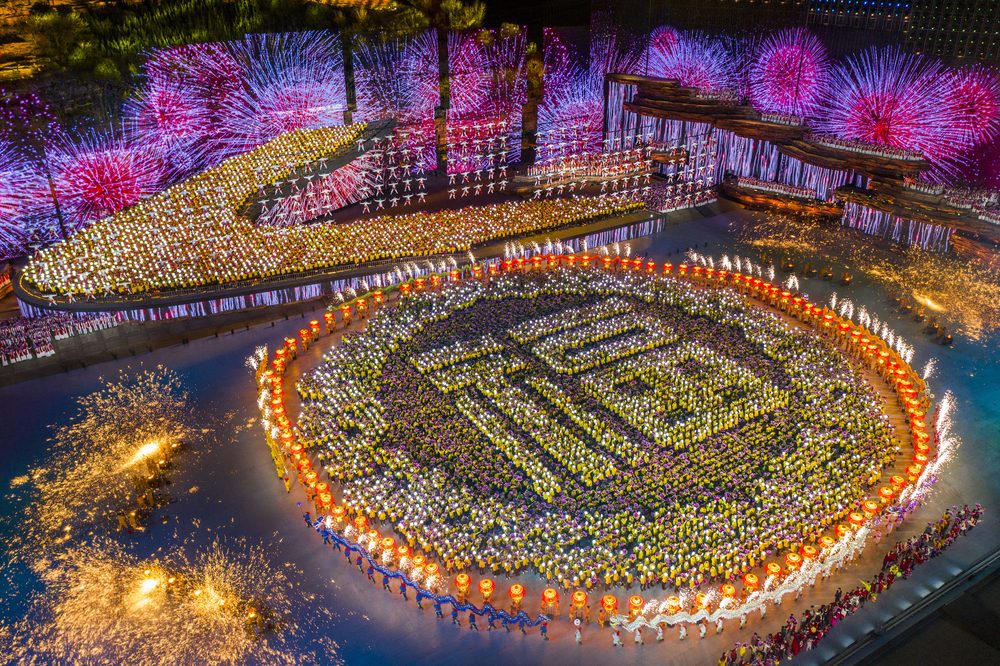
We state pitch as an individual delivered specification. In our project record, the 10,000 m² screen built for the CCTV Spring Festival Gala in Zhengzhou and Beijing in 2019 was P55. The 8,000 m² screen for the opening ceremony of the 2nd National Youth Games in Shanxi in 2019 was P55 as well. The 5,000 m² screen for the 11th National Traditional Games of Ethnic Minorities in Zhengzhou in 2019 was P50, and the 3,500 m² screen for the OPPO Reno music festival in Chongqing in 2020 was P50. The lifting mesh screen for Wutai Legend at Mount Wutai in 2025 was P40 across 1,500 m², and a museum project in India in 2024 used P40 across 1,500 m².
Those are six separate project facts. They are not a product range, and they should not be read as a set of available options. A seventh project in the same year may use a different pitch for a different viewing distance. Where the project record does not state a pitch, we leave it out rather than infer one. If you need a pitch for your project, the input that matters is the nearest viewer and the camera position, not the most similar line in a table.
Delivered Mesh Screen Projects
| Year | Project | Mesh screen area | Confirmed pitch |
|---|---|---|---|
| 2019 | CCTV Spring Festival Gala, Zhengzhou and Beijing (3D matrix) | 10,000 m² | P55 |
| 2019 | 2nd National Youth Games opening ceremony, Shanxi | 8,000 m² | P55 |
| 2019 | 11th National Traditional Games of Ethnic Minorities, Zhengzhou | 5,000 m² | P50 |
| 2020 | OPPO Reno music festival, Chongqing | 3,500 m² | P50 |
| 2023 | 19th Asian Games, Hangzhou | 6,500 m² | - |
| 2024 | 12th National Traditional Games of Ethnic Minorities, Sanya, Hainan | 5,000 m² | - |
| 2024 | 16th China (Liuyang) International Fireworks Culture Festival | 4,800 m² | - |
| 2024 | A museum in India | 1,500 m² | P40 |
| 2025 | Wutai Legend, Mount Wutai (lifting mesh screen) | 1,500 m² | P40 |
| 2025 | 9th Asian Winter Games, Harbin (floor screen) | 3,000 m² | - |
A dash means the project record does not state a pitch; it is not a claim that pitch was unimportant. Several of these projects also included a floor screen or a 3D matrix. The 19th Asian Games in Hangzhou combined 6,500 m² of mesh screen with 3,200 m² of floor screen, and the 2024 Sanya games combined 5,000 m² of mesh screen with 2,000 m² of floor screen. A 2019 project at the National Stadium in Beijing used a 3D matrix of 400,000 light points for the Asian Culture Carnival, recorded in our project file as a Guinness World Record project.
All of the projects above were delivered by Luminatii Technology Co., Ltd. The spread of years and venues is the useful part of this list: these are not one product repeated at different sizes, but separate engineering jobs for broadcast stages, sports ceremonies, cultural festivals and building facades, each with its own structure, rigging and content. Our product catalog and project references show the wider range.
Rigging, Power and Service Access
Three practical decisions tend to determine whether an installation runs smoothly: where it hangs, how it is fed, and how it is serviced. For rigging, we need the attachment points and the load path, not just a drawing of the screen. For power and signal, we need to know where distribution can sit and how cable routes reach the strips without crossing sightlines or escape routes. For service, we need to know which side a technician can work from and what access equipment is available during the show run.
On a temporary build these questions are answered in a production schedule; on a permanent facade they are answered in a coordination drawing with the building engineer. Either way, the answers belong in the design stage. Retrofitting a service path after the screen is hung is the most expensive kind of change, and it is entirely avoidable. The same is true of a distribution plan that assumes a clear cable route through a set that later turns out to be a moving piece of scenery.
We also keep the after-sales position simple: our standard after-sales support period is one year, and the exact scope and duration are open to discussion and confirmed in the contract. We do not present a component lifetime as a service commitment. What we do set out, per project, are the spare parts, the access method and the commissioning checks your team needs to operate the screen through its first season.
What to Include in the Brief
- Where the screen sits: stage, facade, ceiling or floor, and the structural information for that position.
- The closest and furthest audience positions, plus camera positions if the event is broadcast.
- Surface area and geometry, including any curves, lifts, openings or moving elements.
- Whether the view through the screen matters: sightlines, daylight, lighting rigs or glazing behind it.
- Content type and playback system, including live camera feeds and any synchronised show control.
- Power distribution, cable routes and the available rigging or bracket points.
- Service access: front, rear or both, and the equipment available during the run.
- The approval path for the structural load case and, for a permanent installation, the building coordination process.
A brief with those eight items lets us calculate a pitch, propose a frame and identify the access strategy. A brief with only an area and a date does not, and the number we would have to guess is exactly the one that drives most of the design. It is also the number that tends to be quoted back at us as a firm requirement, which is why we would rather ask the question twice than fill in a blank.
If you are scoping an LED mesh screen for a stage, a facade or a large event, start with the LED mesh screen product page, then send us the structural and viewing information above. Our engineering team works from your geometry rather than from a catalogue, and we will tell you which of the delivered projects is genuinely comparable to yours. Technical notes are on our support page, or contact us to open a project conversation.